

We're living in a time of accelerating technological advancement. AI is writing first drafts, automating reports, and even helping us make decisions. But as machines take on more of the predictable, repeatable tasks, what's left for humans is not less important, it's essential.

The "leftover" work is the complex, the relational, and nuanced. And navigating that space requires something no algorithm can replicate: emotional intelligence.

The rise of soft skills as core skills

You may have heard this before, but it's worth repeating: so-called soft skills are quickly becoming core skills. We are already seeing this shift, where AI is handling the easy, routine work. What it can't replace are the sticky, complex human things: nuance, empathy, and meaning-making.

Skills like empathy, active listening, emotional regulation, and conflict navigation are no longer "nice to have." They're becoming essential for the next generation of effective leaders.

Emotional Intelligence (EI) = Future Readiness

Emotional intelligence helps us:

  • Stay grounded when stakes are high
  • Read the emotional field of a room (what's not being said)
  • Navigate conflict without escalating it
  • Create environments of trust, belonging, and creativity
  • Engage in feedback without defensiveness
  • Make better decisions by not being hijacked by emotional reactivity

EI doesn't just make you a more people-centered leader. It makes you a more strategic one.

This is not new. But it's now urgent.

In a past post, I wrote about the quiet power of emotional intelligence in leadership. 

As artificial intelligence (AI) evolves, emotional intelligence is no longer just good for the culture of the organization; it is essential to its survival.  

If you're leading teams, change, or systems (especially in a hybrid or high-tech context) your ability to attune to others, manage your own reactions, and create emotional safety is what makes all other skills possible.

Three ways to strengthen emotional intelligence in teams

  1. Name the tone. Begin your next meeting by asking: "What's the emotional weather in the room right now?"
  2. Prioritize reflection. Make space to ask: "What are we learning about how we show up with each other?" Not just what's working, but how we're working.
  3. Model repair. When conflict happens, don't brush past it. Model a simple repair: "I noticed tension earlier and I'd like to check in about that."

A final word

As machines get smarter, your competitive edge is becoming more human. Emotional intelligence is no longer a side quest but the core of effective leadership. 

Now is the time to strengthen these skills. Not just to be better teammates and leaders, but to shape workplaces ready for what's coming.

Further Exploration

IMAGO – Delivering Student Centered Soft Skills
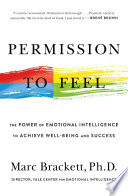
Permission to Feel
The mental well-being of children and adults is shockingly poor. Marc Brackett, author of Permission to Feel, knows why. And he knows what we can do. “We have a crisis on our hands, and its victims are our children.“Marc Brackett is a professor in Yale University’s Child Study Center and founding director of the Yale Center for Emotional Intelligence. In his 25 years as an emotion scientist, he has developed a remarkably effective plan to improve the lives of children and adults – a blueprint for understanding our emotions and using them wisely so that they help, rather than hinder, our success and well-being. The core of his approach is a legacy from his childhood, from an astute uncle who gave him permission to feel. He was the first adult who managed to see Marc, listen to him, and recognize the suffering, bullying, and abuse he’d endured. And that was the beginning of Marc’s awareness that what he was going through was temporary. He wasn’t alone, he wasn’t stuck on a timeline, and he wasn’t “wrong” to feel scared, isolated, and angry. Now, best of all, he could do something about it.In the decades since, Marc has led large research teams and raised tens of millions of dollars to investigate the roots of emotional well-being. His prescription for healthy children (and their parents, teachers, and schools) is a system called RULER, a high-impact and fast-effect approach to understanding and mastering emotions that has already transformed the thousands of schools that have adopted it. RULER has been proven to reduce stress and burnout, improve school climate, and enhance academic achievement. This book is the culmination of Marc’s development of RULER and his way to share the strategies and skills with readers around the world. It is tested, and it works.This book combines rigor, science, passion and inspiration in equal parts. Too many children and adults are suffering; they are ashamed of their feelings and emotionally unskilled, but they don’t have to be. Marc Brackett’s life mission is to reverse this course, and this book can show you how.
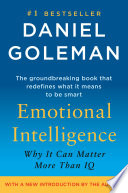
Emotional Intelligence
#1 BESTSELLER • The groundbreaking book that redefines what it means to be smart, with a new introduction by the author “A thoughtfully written, persuasive account explaining emotional intelligence and why it can be crucial.”—USA TodayEveryone knows that high IQ is no guarantee of success, happiness, or virtue, but until Emotional Intelligence, we could only guess why. Daniel Goleman’s brilliant report from the frontiers of psychology and neuroscience offers startling new insight into our “two minds”—the rational and the emotional—and how they together shape our destiny. But why is emotional intelligence important?Drawing on groundbreaking brain and behavioral research, Goleman shows the factors at work when people of high IQ flounder and those of modest IQ do surprisingly well. These factors, which include self-awareness, self-discipline, and empathy, add up to a different way of being smart—and they aren’t fixed at birth. Although shaped by childhood experiences, emotional intelligence can be nurtured and strengthened throughout our adulthood—with immediate benefits to our health, our relationships, and our work. The twenty-fifth-anniversary edition of Emotional Intelligence could not come at a better time—we spend so much of our time online, more and more jobs are becoming automated and digitized, and our children are picking up new technology faster than we ever imagined. With a new introduction from the author, the twenty-fifth-anniversary edition prepares readers, now more than ever, to reach their fullest potential and stand out from the pack with the help of EI.
Artificial Intelligence in Education
“The landscape for education has been rapidly changing in the last years: demographic changes affecting the makeup of families, multiple school options available to children, wealth disparities, the global economy demanding new skills from workers, and continued breakthroughs in technology are some of the factors impacting education. Given these changes, how can schools continue to prepare students for the future? In a world where information is readily available online, how can schools continue to be relevant? The emergence of Artificial Intelligence (AI) has exacerbated the need to have these conversations. Its impact on education and the multiple possibilities that it offers are putting pressure on educational leaders to reformulate the school curriculum and the channels to deliver it. The book “Artificial Intelligence in Education, Promises and Implications for Teaching and Learning” by the Center for Curriculum Redesign immerses the reader in a discussion on what to teach students in the era of AI and examines how AI is already demanding much needed updates to the school curriculum, including modernizing its content, focusing on core concepts, and embedding interdisciplinary themes and competencies with the end goal of making learning more enjoyable and useful in students’ lives. The second part of the book dives into the history of AI in education, its techniques and applications -including the way AI can help teachers be more effective, and finishes on a reflection about the social aspects of AI. This book is a must-read for educators and policy-makers who want to prepare schools to face the uncertainties of the future and keep them relevant.” --Amada Torres, VP, Studies, Insights, and Research, National Association of Independent School (NAIS) “The rapid advances in technology in recent decades have already brought about substantial changes in education, opening up new opportunities to teach and learn anywhere anytime and providing new tools and methods to improve learning outcomes and support innovative teaching and learning.Research into artificial intelligence and machine learning in education goes back to the late 1970s. Artificial intelligence methods were generally employed in two ways: to design and facilitate interactive learning environments that would support learning by doing, and to design and implement tutoring systems by adapting instructions with respect to the students’ knowledge state.But this is just the beginning. As Artificial Intelligence in Education shows, AI is increasingly used in education and learning contexts. The collision of three areas - data, computation and education - is set to have far-reaching consequences, raising fundamental questions about the nature of education: what is taught and how it is taught. Artificial Intelligence in Education is an important, if at times disturbing, contribution to the debate on AI and provides a detailed analysis on how it may affect the way teachers and students engage in education. The book describes how artificial intelligence may impact on curriculum design, on the individualisation of learning, and on assessment, offering some tantalising glimpses into the future (the end of exams, your very own lifelong learning companion) while not falling victim to tech-hype. The enormous ethical, technical and pedagogical challenges ahead are spelt out, and there is a real risk that the rapid advances in artificial intelligence products and services will outstrip education systems’ capacity to understand, manage and integrate them appropriately. As the book concludes: “We can either leave it to others (the computer scientists, AI engineers and big tech companies) to decide how artificial intelligence in education unfolds, or we can engage in productive dialogue.“I commend this book to anyone concerned with the future of education in a digital world.” --Marc Durando, Executive Director, European Schoolnet