

When you hear the word “conspire,” what comes to mind?
For most of us, secret plots or shady backroom deals may be the first thing to come to mind. The original meaning of the word is quite different and surprisingly human.
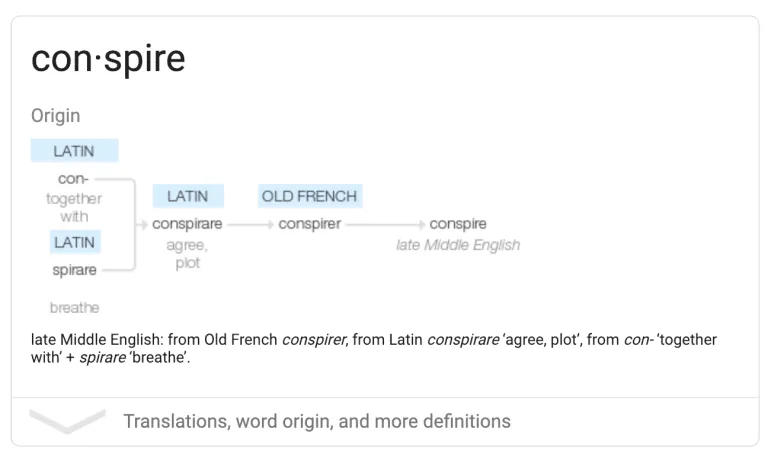
Etymologically, “conspire” comes from the Latin conspirare literally, “to breathe together.”
A client recently reminded me of this original meeting, and I wanted to share this with you all. A reframing of this word. Before it was about scheming, it was about synchronicity. Before it was about manipulation, it was about shared presence.
In times of uncertainty, conflict, or complexity, what we need isn’t more control or command; it's to conspire together in the truest sense.
Why Breathing Together Matters
The brain is a prediction machine. It constantly scans for signals: Am I safe? Am I seen? Am I in this alone?
Stress and ambiguity activate our limbic system, making us alert and more reactive, defensive, or disconnected. But we can interrupt this automatic response, starting with how we connect with each other.
Neuroscience research shows that co-regulation, when one nervous system helps another calm down, happens through shared presence, breath, tone, and body language.
When we slow down, pause, and breathe together (literally or metaphorically), we activate parts of the brain that support reflection, empathy, and meaning-making. Once our prefrontal cortex re-engages, we can choose wiser actions.
That’s conspiring in its highest form.
What Conspiring Together Looks Like in Practice
Here are a few ways leaders and teams can breathe together in hard times—whether the tension is organizational, interpersonal, or existential:
Pause before problem-solving: In difficult moments, don’t jump straight to action. Take one full breath together to allow the nervous system to downshift. Invites people to bring their full selves forward by asking:
- Before we dive in, can we take 30 seconds to just breathe?
- What’s the emotional tone in the room right now?
Name what’s true, together: Even partial truths can create momentum toward trust. Invite team members to name:
- What’s one thing you are carrying that might affect how we show up?
- What feels hard to say right now?
Synchronize intentionally: Small signals matter more than we think. In-person or virtual, use subtle cues to align energy:
- Match body posture when listening
- Use consistent rituals (e.g., check-ins, moments of silence, shared visuals)
Normalize shared language for emotional regulation: This models psychological safety and invites others to self-regulate too. You can say:
- I need a breath.
- Can we pause before responding?
Breathe Together: When trust has broken down or a team is overwhelmed, use collective breath to reset:
- Begin the meeting with a 1-minute breathing exercise.
- End difficult conversations by taking a breath together before adjourning.
Why This Matters
We don’t get to choose the complexity of the world, but we do get to choose how we respond.
Remember that conspiring is breathing together; before you can solve a problem, a leader must sense it, and to solve it well, you must first relate to each other before reacting.
When we breathe together, we remember we’re not alone. And from that place, better decisions and deeper connections can emerge.
Further Exploration
 Kelvin F. Alfaro
 Matthew D Lieberman
 NLI Staff