

Have you ever kept searching after you already had enough information to make a decision? Another article, another comparison, another question for AI. Each answer gives you something else to consider, and somehow you feel no closer to choosing.
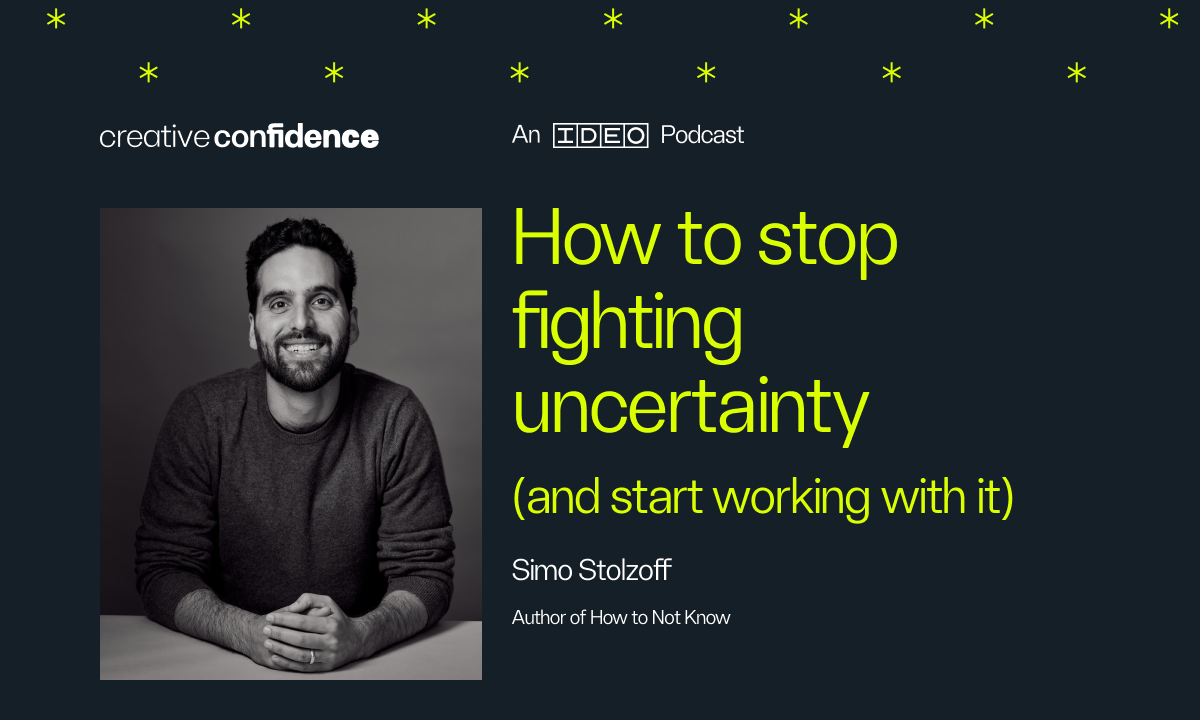
This week I am reading Simone Stolzoff's How to Not Know: The Value of Uncertainty in a World That Demands Answers. It got me thinking about how we live with uncertainty, especially when we have become accustomed to asking Google or AI a question and receiving an answer almost immediately.
I think that expectation can leave us stuck. We have answers endlessly available, yet, we choose and taking a risk is still difficult. We keep looking for the answer that will let us move forward without doubt.
There is something to be said about acting without knowing the outcome.
Answers at our fingertips
Stolzoff observes that access to information can encourage us to expect answers whenever we want them. That expectation becomes difficult to live with when we encounter something that doesn't have a binary answer.
There is a difference between finding a grant application deadline and deciding whether pursuing it serves the organization's mission. The first has an answer we can verify. The second involves judgment about capacity, priorities, and a future we cannot fully predict.
Research or a thoughtful conversation can help us make that judgment. But we cannot guarantee that a decision will work out. We still have to decide what matters and which risks we are willing to take.
Instant answers keep us comfortable
Stolzoff organizes the book around three “certainty traps” : comfort, hubris, and control.
- Comfort keeps us with what feels familiar.
- Hubris makes it harder to recognize the limits of what we know.
- Control encourages us to believe we can plan away every unknown.
The comfort trap is especially useful for understanding indecision. Analysis paralysis as a way of remaining in familiar thought patterns while avoiding the discomfort of making a choice.
For leaders, another round of data can easily become a way to postpone taking responsibility. Of course, sometimes we really do need more information. We may be missing the perspective of people who will carry out a change, or evidence about a consequence we have underestimated. The distinction matters. We need to be able to name the missing information and explain how it could change our decision.
Que será, será
The phrase that comes to mind for me is “que será, será”: whatever will be, will be.
I find something freeing in allowing the future to remain partly unknown. We can take care with a decision, follow through on it, and accept that the outcome will also depend on things beyond us. We do not have to solve every possible future before participating in the one unfolding now.
That acceptance still carries responsibility. A leader cannot withhold information, leave roles unclear, or ignore a foreseeable problem and then ask everyone to be comfortable with uncertainty. We owe people the clarity we can provide. We also owe them honesty about what remains open.
The practice is learning to tell those apart:
- What can I clarify?
- What can I influence?
- What will I have to meet as it happens?
Sometimes understanding comes from doing.
Experience can reveal something that repeated deliberation cannot. Consider the following: look for a small, responsible way to learn through action and normalize questioning assumptions.
For example, before adopting a new meeting format across an organization a team could try it for a defined period, ask participants what helped, and decide whether to continue.
This also requires an environment where people can revise their thinking. That gives a team something concrete to learn from. We can ask what we missed without pretending that the answer was obvious all along.
The trial has a purpose and a point at which someone will make that decision.
Try this: Put a boundary around the next search
Choose one decision you have been circling. Before asking Google, AI, or another person for more advice:
- Write down the specific thing you still need to learn. What would you do differently depending on the answer?
- Write down what will remain uncertain even after you have that information. What outcome do you wish someone could guarantee?
- Identify a next step that fits the stakes. It might be a decision, a conversation with someone, or a limited trial with an end date.
- Set a point to review what happened. Keep a short record of what you expected so you can return to your actual reasoning.
If you cannot name how another answer would change your next step, pause before opening another tab. There may already be enough information to begin, with room to adjust as you learn.
Further Exploration
 Amazon (US)
 Daniel Kahneman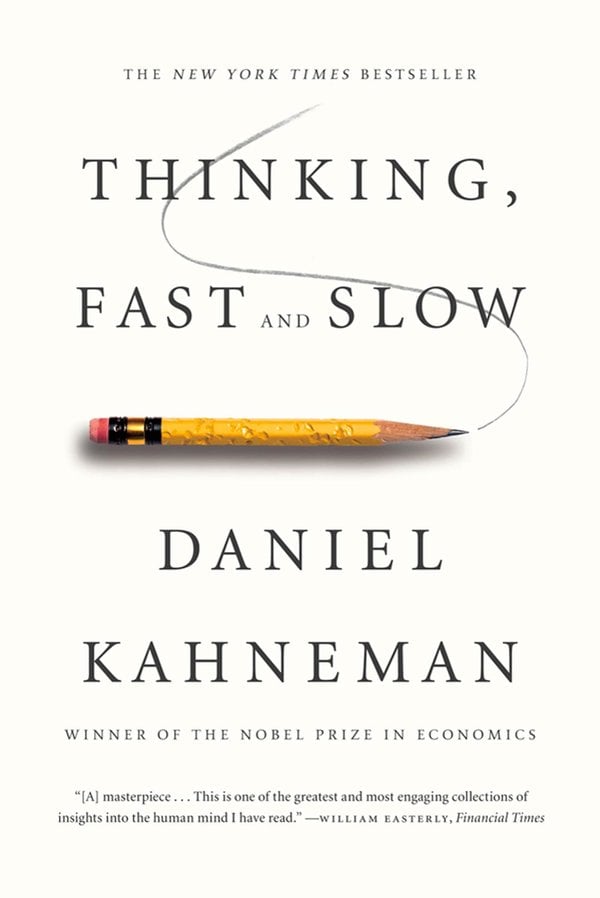
 Rachel Youngblade