

When I work with leaders, I see how quickly the desire to help becomes the instinct to solve.
Someone is discouraged, overwhelmed, quiet, or not quite themselves. A caring leader moves toward advice. They offer a next step or try to remove the obstacle. The offer is generous. But sometimes the person does not need a solution first. They must know they are not alone.
A conversation, a check-in, a smile, or a Teams message can say, “I see you, and you matter here.” That may sound simple, but the brain is social. It reads connection as information about safety, belonging, and whether it can stay open to the world.
Connection is a basic human need
Psychologists describe belonging as a basic human need. We need lasting, positive relationships in which care and recognition are repeated over time.
Neuroscience gives us another way to understand this. Some of the brain’s responses to social exclusion overlap with its responses to physical pain. The two experiences are not identical, but exclusion and disconnection can register in the body as more than an idea.
This is why belonging and inclusion matter in everyday leadership. They shape whether people feel safe enough to participate, take risks, recover from feedback, ask for help, and stay in relationships when work gets difficult.
Connection needs attention and accountability
Relationships need attention, practice, repair, and repetition. While many organizations say people are their greatest asset, only a few design work in ways that protect the relationships people need in order to thrive. We fill calendars, compress timelines, reward urgency, and then wonder why people feel unseen.
Connection is the repeated experience of being recognized, included, and met with enough care that trust has somewhere to grow. Kindness makes that connection visible.
- A person remembers who checked in after a hard meeting.
- A colleague remembers who made room for their voice.
- A new employee remembers who explained the unwritten rule.
- A team member remembers who followed up because it mattered, not because it appeared on a project plan.
In the SCARF model, relatedness is our sense of connection with others. When relatedness is threatened, people are more likely to protect themselves. When it is reinforced, they are more able to stay open, curious, and collaborative.
Try this: Pause before fixing
Connection is usually built in ordinary moments and leaders can practice it in a few concrete ways:
- Ask what support is needed. When someone brings you something difficult, ask, “Would it be helpful for me to listen first, or are you looking for ideas?” This gives the other person a choice.
- Follow up on something specific. If someone mentions a difficult transition, a sick parent, a child’s performance, or a difficult week, make a note and ask about it later. Follow-up turns a passing conversation into a connection.
- Notice who is at the edges. In meetings, pay attention to who is speaking, who is interrupted, who is doing quiet labor, and who is missing from informal networks.
- Name the contribution you saw. “Thank you for that” is a fine response. “Thank you for naming the risk we were avoiding” is more useful. Specific recognition helps people understand what you noticed.
- Repair missed connection. If you forgot to follow up, interrupted someone, or moved too quickly into advice, name it. “I realized I went straight into fixing yesterday. I want to come back and ask how you are actually doing.” Repair is one of the clearest forms of kindness.
These practices do not take much time, but they do require attention. Attention is one of the clearest ways we show care.
A final thought
Many people feel disconnected while being constantly surrounded with people. We do not need to romanticize connection or complicate it. People need to feel less alone.
It can be as simple as a conversation, a check-in, a question asked with genuine curiosity, or a moment of presence when advice would have been easier. Kindness will not solve every problem, but it can help someone feel seen and supported enough to take the next step.
Further Exploration
 Brigid Lynn, MPH, PhD and Emma Sarro, PhD
 Liz Mineo
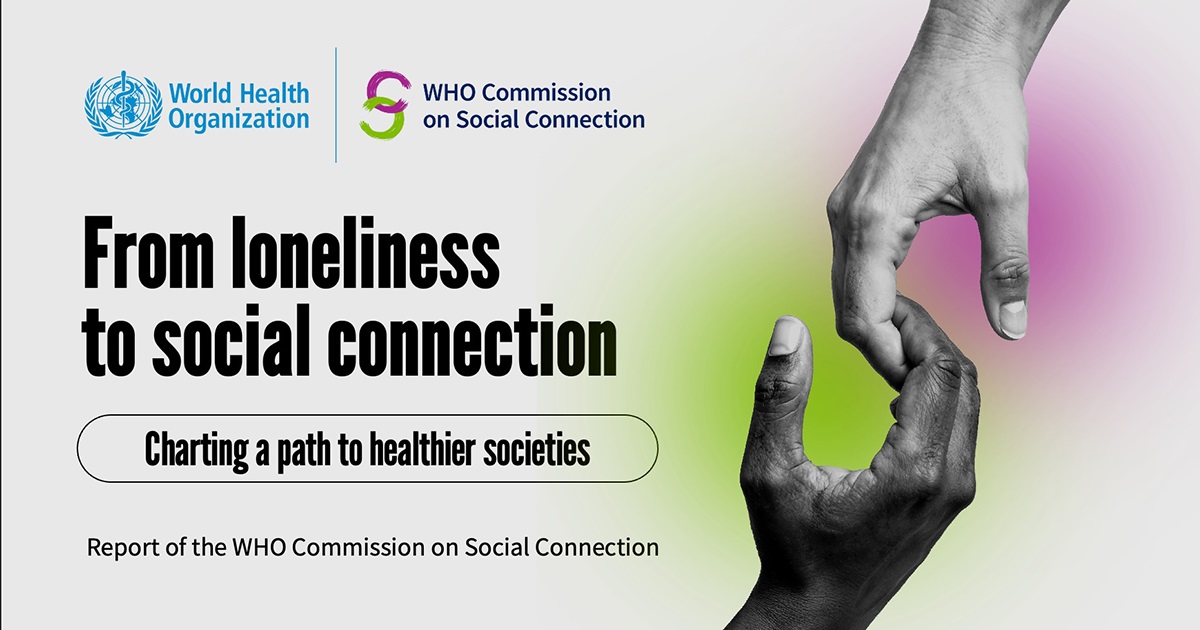
 WHO Commission on Social Connection