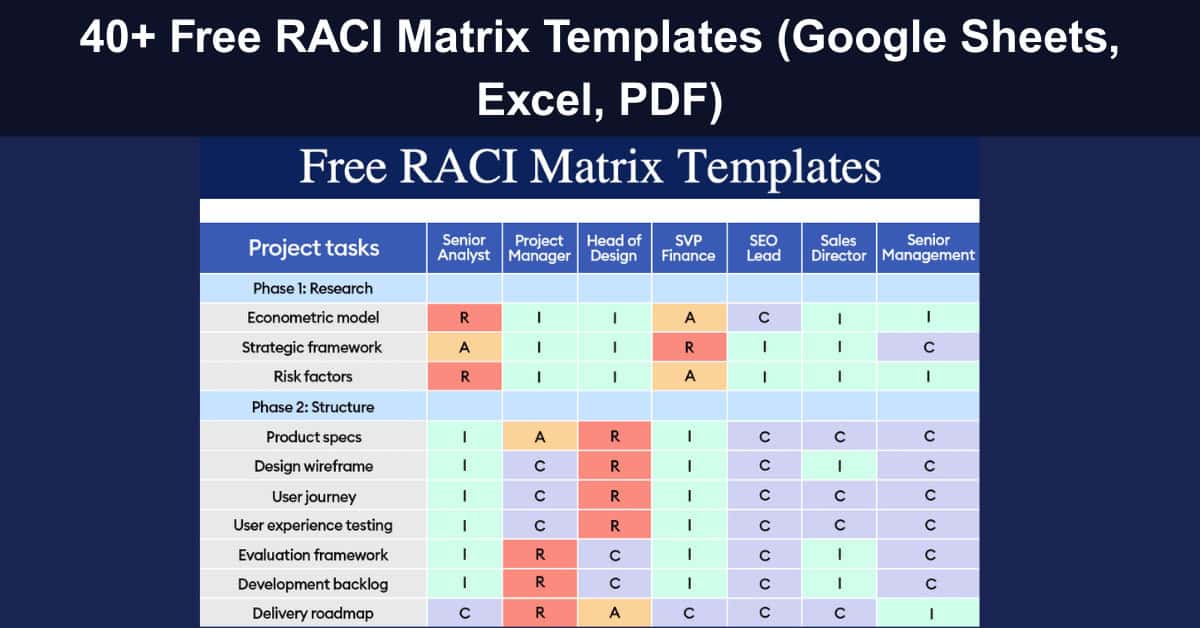


When was the last time you heard, “I thought someone else was handling that”? It is a common line that points to ambiguity within organizations.
Projects start with energy. Timelines and tasks get named, and people nod their heads. And yet, somewhere between agreement and execution, confusion creeps in. Multiple people think they own the same decision, while others assume someone else is responsible. Leaders get pulled into details they never meant to hold. The result is frustration, duplicated effort, delay, or quiet resentment.
When I encounter this, I often come back to a trusted tool: the RACI matrix. At face value, RACI looks like a simple project management tool. In practice, it goes beyond a spreadsheet exercise. It's a tool to explore relationships and reduce confusion, support trust, and help teams stay in alignment without over-relying on constant meetings or unspoken assumptions.
From a NeuroLeadership lens, that matters more than many leaders realize. Our brains are constantly scanning for signals of certainty, autonomy, fairness, and status. When roles are unclear, confusion rises, and so does threat.
What RACI actually does
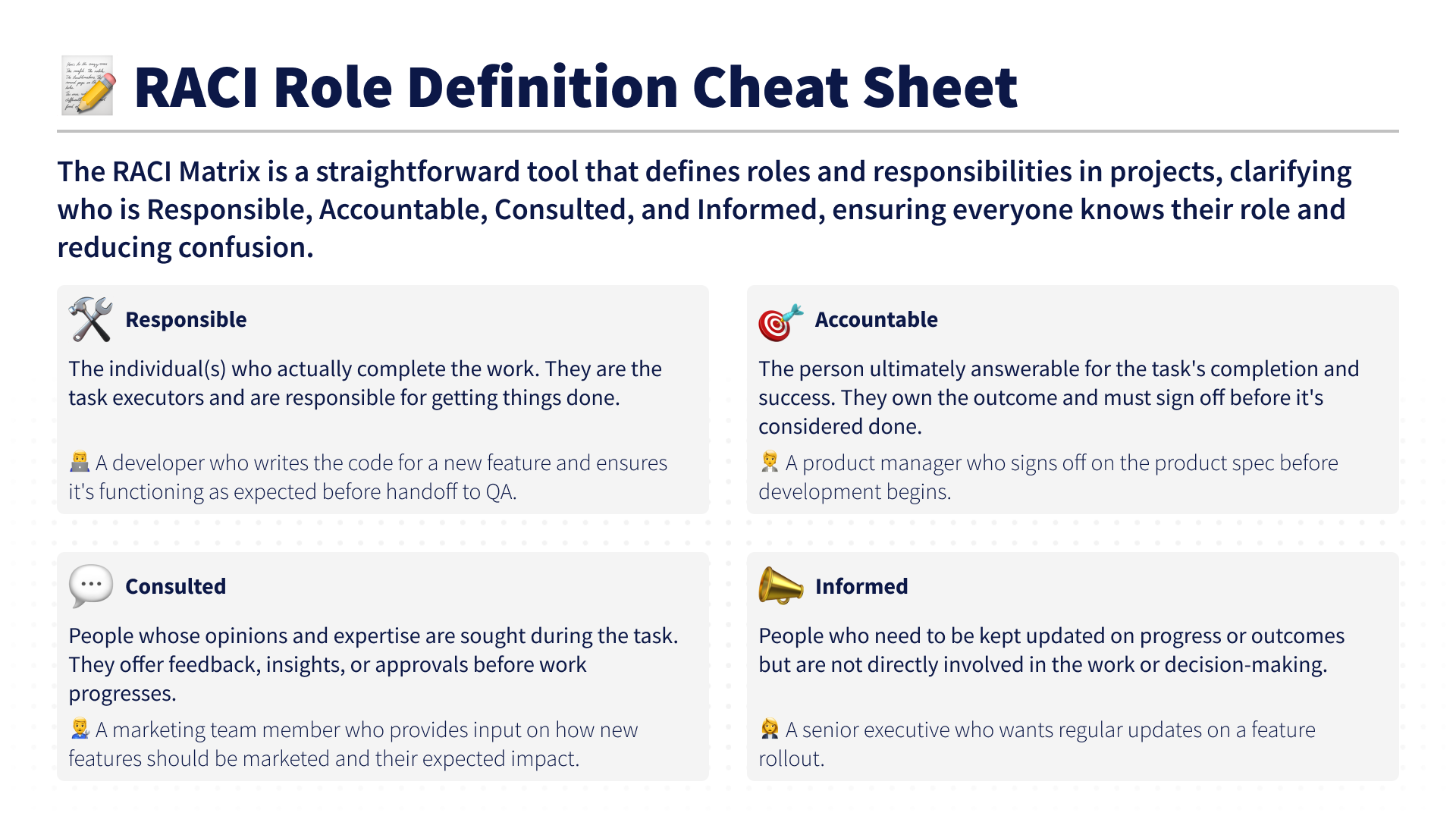
If you have never used RACI before, here is the simple version:
- Responsible means the person or people doing the work
- Accountable means the person ultimately answerable for the outcome
- Consulted means those whose input is needed before decisions are made
- Informed means those who need updates but are not decision-makers
This is straightforward, but the power of RACI is not in the letters alone. The real value is in the conversation it invites a team to have. Those conversations reveal how power, communication, and expectations are operating in the system.
Why ambiguity triggers the brain
I have mentioned the SCARF model developed by David Rock a few times before. This is one of the most useful frameworks from NeuroLeadership. SCARF reminds us that five social needs strongly shape how people respond at work: status, certainty, autonomy, relatedness, and fairness. When these needs are threatened, people can move into protect mode rather than participate mode.
This is where RACI becomes more than an operations tool.
- Certainty: The brain likes to know what is expected. When roles are fuzzy, people spend extra energy trying to read the room, interpret signals, or protect themselves from being blamed later. Clear role definitions lower that cognitive load and help people know where to focus.
- Fairness: Nothing erodes trust faster than uneven expectations. If one person is carrying hidden labor while someone else assumes they are only “supporting,” tension builds quickly. RACI helps make workload and decision rights more visible, which supports a stronger sense of fairness.
- Autonomy: People need room to act without being second-guessed at every turn. A good RACI clarifies where someone has authority to move, where input is needed, and where updates are enough. That protects autonomy without creating chaos.
- Status: Unclear decision-making can create status threat fast. People may wonder, “Why was I left out?” or “Why am I being asked to do the work without any real voice?” RACI helps teams define involvement in ways that are more respectful and transparent.
- Relatedness: When confusion sets in, people often start making stories about each other. “They are controlling.” “They are disengaged.” “They always drop the ball.” Often, the real issue is not character. It is a poorly designed system. RACI can reduce unnecessary friction by helping people understand one another’s roles more clearly.
RACI enables conversation
This is where I think leaders sometimes miss the point. A RACI created in isolation does not solve much or may make things worse. Used well, RACI should be co-created.
As an ORSC-informed practitioner, I think of this as working with the relationship system, not just the RACI framework. Questions such as:
- Where is the system overdependent on one person?
- Where are consultation expectations too broad?
- Where is accountability split in ways that create confusion?
- Where are people carrying silent assumptions about who gets to decide?
RACI helps surface these hidden dynamics. It gives the team a shared language for discussing work in a more grounded and less personal way.
Common mistakes leaders make with RACI
I have seen a few patterns show up repeatedly.
- Mistaking “Responsible” for “Accountable”: These are not the same. Many people can be responsible for pieces of the work, but usually one person should be accountable for the outcome. When this is muddled, teams either duplicate effort or avoid decisions.
- Overloading the “Consulted” category: Some teams use consultation so broadly that decision-making slows to a crawl. Consulting everyone can feel inclusive, but it can also create confusion and fatigue. Being thoughtful about who truly needs input is part of respectful leadership.
- Using RACI to control instead of align: If RACI becomes a way to centralize power or monitor people too tightly, the tool starts working against trust. The goal is alignment, not micromanagement.
- Treating RACI as static: Teams, capacity, and projects change. RACI should be revisited, especially at key transition points; otherwise, it just creates more confusion.
Try this: a brain-wise way to build a RACI
If you want to use RACI with your team, keep it simple and relational. Start with one project, not the whole organization. Then walk through these questions together:
- What are the key decisions or deliverables in this work?
- Who is doing the work?
- Who is ultimately accountable?
- Who truly needs to be consulted before decisions are made?
- Who simply needs to be kept informed?
- Where do we feel overlap, confusion, or tension right now?
As you do this, pay attention to the emotional data in the room too.
- Where do people seem protective?
- Where do they look relieved?
- Where do they seem surprised?
This is useful information that points to places where certainty, fairness, or autonomy have been under strain.
RACI as a cultural practice
At its best, RACI does more than clarify tasks. It fosters a more robust team culture, empowers individuals to understand their responsibilities, aids leaders in refraining from rescuing or over-functioning, alleviates the stress of uncertainty for teams, and guides organizations from role confusion to a shared understanding.
I do not see RACI as a cure-all. A chart alone will not fix a culture. But I do believe structure can be an act of care. In environments where people are already carrying change, complexity, and overload, clarity is not cold. Clarity is supportive.
When we reduce ambiguity, we free up more energy for collaboration, creativity, and trust. That is better project management, and it is also better leadership.
Further exploration
 Kelvin F. Alfaro
 Karen Green | EVP Strategy Director, Leo Burnett
 Shane Drumm