

I have been thinking about what makes a strategy feel real to a team.
It is not only the quality of the final document. Many strategies are beautifully written and barely remembered. They sit in slide decks, annual reports, dashboards, and staff meeting updates while the work continues from old assumptions.
People may agree with the strategy in public and still not know how to use it. They may understand the priorities at a surface level without feeling connected to the choices behind them.
AI can make this pattern easier to miss.
A team can now generate strategic language quickly. It can draft goals, name themes, propose initiatives, and summarize stakeholder input in minutes. That speed is useful, especially for organizations with limited time and capacity. But strategy is more than a writing task. It is a learning process.
If the team does not learn its way into the strategy, the strategy may never become theirs.
Strategy requires generation
The AGES model from the NeuroLeadership Institute offers a helpful way to think about learning. AGES stands for attention, generation, emotion, and spacing.
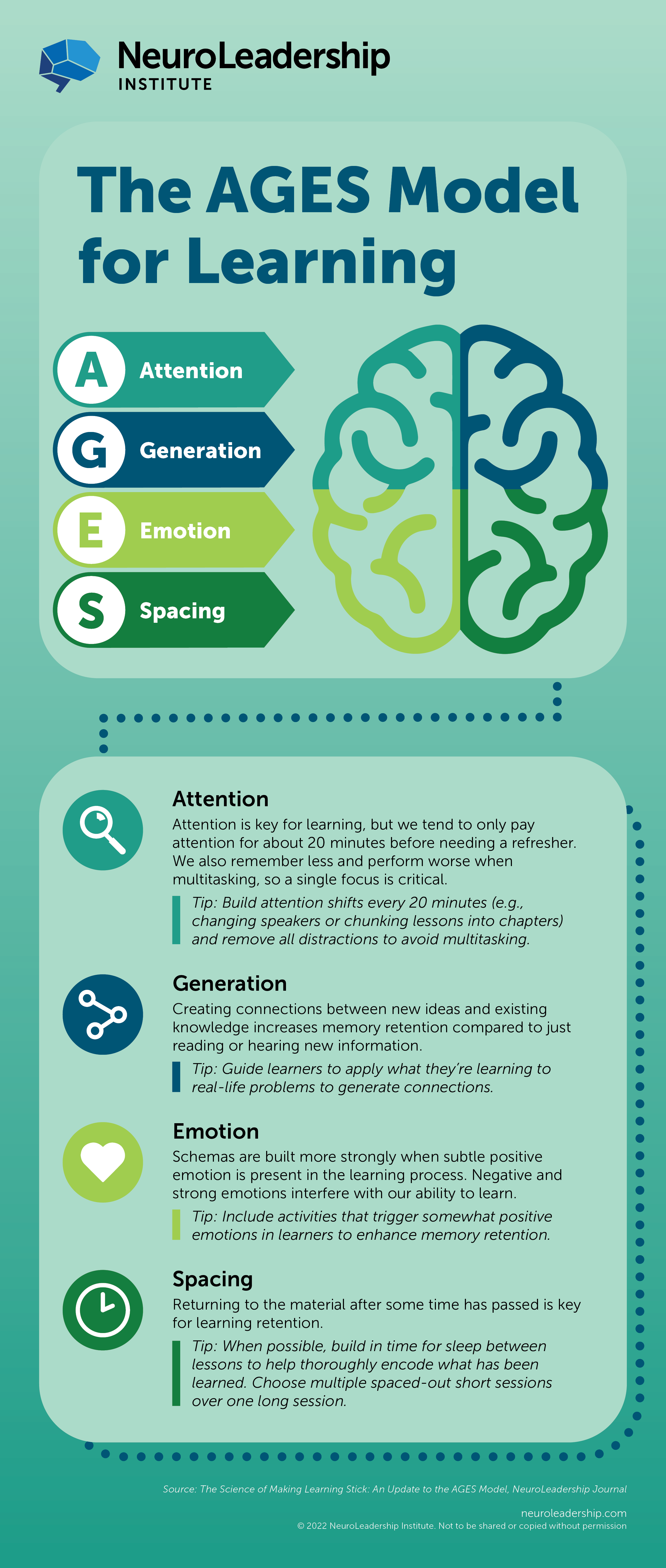
Generation is the key piece I keep returning to. Generation means people are actively making meaning. They connect ideas, form examples, ask questions, test implications, and put the work into their own language.
This aligns with the generation effect in cognitive psychology: people tend to remember and understand information better when they generate it themselves rather than simply read it.
That has a direct implication for AI-assisted strategy. If AI creates the language before the team has developed its own understanding, the strategy can become something people review instead of something they build.
A team needs to think before it wordsmiths. It needs to wrestle with the problem, name what is true and contested, and decide what is no longer sustainable.
That is how strategy becomes more than a document.
Some struggle is productive
There are reasonable places to use automation, but some struggle is productive.
- This is where people discover that they do not agree on the problem.
- Where a team realizes that three goals are competing for the same staff capacity.
That kind of struggle is where learning happens. If leaders use AI to skip over that part, they may get cleaner language and weaker commitment. The plan may arrive faster, but the alignment may be thinner.
Buy-in is not agreement at the end
For many organizations, buy-in sought after the strategy is mostly formed. This sequence may ask people to endorse conclusions they did not help understand.
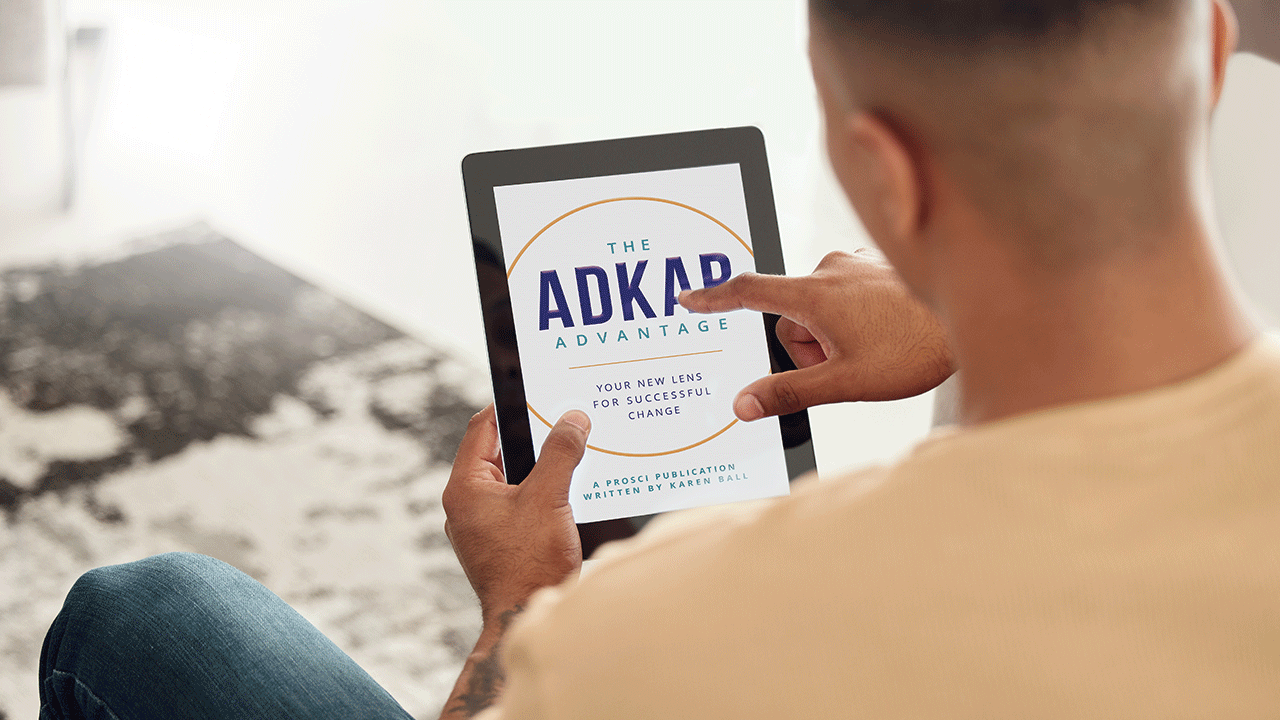
Prosci’s ADKAR model is useful here because it reminds us that change happens through individual transitions. People need awareness, desire, knowledge, ability, and reinforcement. A finished strategy document does not create those outcomes on its own.
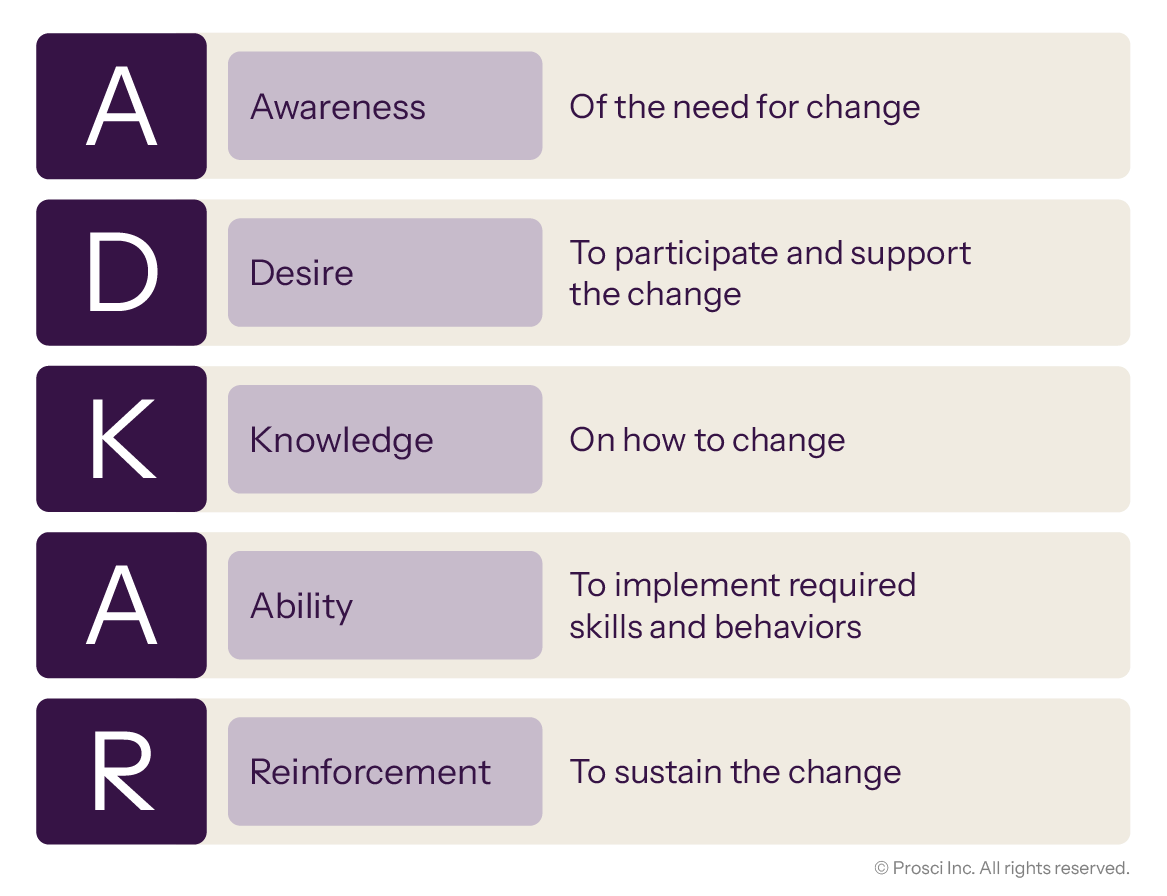
People need to understand why the strategy matters, see what it asks them to do, practice new ways of working, and receive reinforcement when pressure returns. Those conditions are built through communication, practice, feedback, and involvement over time.
This is why participation matters. People need a chance to shape understanding, surface constraints, test language, and influence choices before the strategy hardens.
Let people name reality before AI enters
A practical shift is to decide where AI enters the strategy process. If it enters too early, it may frame the problem before the team has named its own reality. The language can become persuasive before it is grounded. A better sequence is often:
- Let people generate first.
- Use AI to organize, expand, challenge, or synthesize.
- Bring the output back to the group for interpretation and choice.
Before asking AI to draft strategic priorities, ask:
- What are we seeing that we can no longer ignore?
- Where are people experiencing the most friction?
- What promises have we made that our current system cannot keep?
- What would we need to stop doing to make room for what matters most?
AI can then help organize themes, identify patterns, propose possible priority statements, or generate questions the team has not considered. The tool becomes a thinking partner without becoming the source of meaning.
Strategy lives in translation
A strategy is not fully understood until people can translate it. And many strategies fail in that translation. Generation helps because it asks people to put the strategy into their own language and reveals where the ideas are clear and where they are not. The test is simple:
- Can people say what this means for their work?
- Can they name what will be different?
- Can they explain what tradeoff the organization is making?
- Can they tell when a new idea fits the strategy and when it distracts from it?
Try this: Build a generation-first strategy process
- Begin with silent generation. Ask each person to write their own answer to the core strategy question before discussion or AI input. This protects independent thinking and reduces early anchoring. It also allows all voices to come into the room, and not just the fastest thinkers.
- Name the problem in plain language. Ask the team to complete: “The challenge we are trying to solve is…” Compare the sentences. The differences are useful information.
- Use AI after the first round. Feed AI the team’s raw themes and ask it to cluster patterns, identify tensions, and suggest questions. Ensure to ask it NOT to finalize the strategy yet.
- Separate synthesis from choice. Let AI help summarize. Let humans decide. Make that distinction explicit so people know where judgment lives.
- Translate and revisit. Ask each group to explain the emerging strategy for its own context. Bring the language back after some time has passed and ask what stayed clear, what became fuzzy, and what changed.
Once the strategy is approved, connect it to meeting agendas, decision criteria, resource conversations, and progress reviews. Strategy sticks when the system keeps asking people to use it.
A final thought
AI can help teams move faster, but speed is not the same as learning.
When teams generate their own understanding, they are more likely to remember the work, trust the choices, and act with coherence. They can explain the strategy because they participated in making meaning from it.
That is why generation has to come before automation. Strategy is not only the answer a team produces. It is the understanding the team builds together.
Further exploration
 Published onAugust 23, 2022

Reports on 5 experiments with 96 undergraduates, comparing memory for words that were generated by the Ss themselves with the same words when they were simply presented to be read. In all cases, performance in the Generate condition was superior to that in the Read condition.