


One of my goals this time last year was to explore what my leadership style or framework is like. So, I have been sitting with the question of "What helps us lead with integrity when the person, the relationship, and the wider system are all under pressure at once?"
A leader can be clear about their values and still miss what is happening in the room. A team can agree on the right action while its roles, resources, and decision process pull in another direction. A leader can acknowledge an impact and still leave the conditions that produced it untouched.
These are connected leadership problems. They need a framework that begins with the self but does not end there.
A foundation to Build Upon
There are many leadership frameworks out there already, but many do not resonate with me or require updating for more modern times. That is why when I saw that Aiko Bethea published Anchored, Aligned, Accountable earlier this year, I became really excited. Her framework asks us to anchor in our values and purpose, align our actions and principles, and take responsibility for our impact. It also brings power, identity, ownership, connection, and repair into conversations about how we live and lead.
As I considered how to use these ideas with leaders, teams, and organizations, I found myself asking a few additional questions. Where does sustained attention enter the process? What happens when a leader's actions align with their values but the surrounding structure does not? How do we keep accountability from stopping at apology or individual behavior? And what ensures that experience changes what the system does next?
This is where the idea of a five-move cycle comes into play. Ground. Be present. Create coherence. Own. Grow
Aiko's Foundation Expanded
Leadership is rarely linear. We learn something that changes our understanding of the purpose. We discover that a decision that looked great on paper landed differently in practice. An attempt at repair reveals a systemic issue that also needs to change.
That is why I think of grounded leadership as a cycle rather than a ladder. Leaders may enter at any point, but each move asks something different of them. The cycle also works across three levels:
- Personal: What values, emotions, identities, assumptions, and habits am I bringing?
- Relational: What is happening between us? How are trust, power, roles, and patterns shaping the work?
- Systemic: What structures, incentives, histories, resources, and decision pathways are producing the conditions we see?
By focusing on all three levels it helps us avoid two familiar traps: not reducing structural problems to individual behaviors and not using pseudo-systems language to avoid personal responsibility.
Five steps to grounded leadership
1. Ground in purpose. Ask yourself, what must hold steady? This stays closest to Bethea's idea of being anchored. Purpose, values, role, responsibility, boundaries, and capacity are the steady foundation a leader can work from. Grounding does not remove hard tradeoffs, but it does help distinguish an enduring commitment from a preference, habit, or fear response.
2. Practice presence. Ask yourself, what is happening right now, and what might we be missing? I made presence a separate action because attention is often where leadership breaks down and one of the most difficult resources to come by in our modern age. Bethea's work already values listening for connection; I posit extending that into an explicit practice of noticing what is happening within us, between us, and around us before deciding what it means.
Presence includes power awareness. The same invitation to speak does not carry the same risk for everyone. A leader has to notice silence, missing voices, workarounds, tension, threat responses, and the informal places where work is actually getting done. More information does not guarantee better attention.
3. Create coherence. Ask yourself, what needs to fit together for our response to make sense? This move is about expanding alignment beyond consistency between personal values and individual action. Coherence asks whether the response makes sense as a whole. Does intention and impact line up? Do priorities, roles, authority, resources, measures, and incentives reinforce the stated direction?
Coherence does not require uniformity. People can disagree and still work within a clear purpose, a legitimate decision process, and shared commitments. In organizations with distributed authority, clarity about who decides, who advises, who must be consulted, and how a decision will be revisited matters more than artificial consensus.
4. Own the impact. Ask yourself, what must we acknowledge, do, repair, or follow through on? This step remains grounded in Bethea's treatment of accountability and repair. An explicit focus on follow-through and the conditions around the behavior is a warranted addition. Ownership includes acknowledging impact, making commitments visible, repairing what can be repaired, and changing the structures or routines that allowed a harmful pattern to continue.
This avoids blame, which separates a person from the system that shaped the outcome. It also avoids diffusion, where so many contributing factors are named that no one remains responsible for acting.
5. Grow through learning. Ask yourself, what is this experience asking me to learn, change, or become? Growth closes the loop. Accountability matters, but a completed action is not the same as learning. Leaders and teams need to ask whether experience changed an assumption, capability, relationship, decision, or operating condition.
Growth does not mean constant reinvention. Change has costs, and people cannot absorb unlimited experimentation. It means using feedback deliberately, testing uncertain choices at a responsible scale, revisiting decisions, and building what we learn into future practice.
What the systems lens adds
The systems lens centers where leadership responsibility lives. Leaders remain accountable for their own conduct, and they also steward the conditions under which other people are expected to perform.
- If a leader asks for ownership while withholding authority, the problem is not only motivation.
- If a team asks for feedback but punishes unwelcome news, the problem is not only communication skill.
- If an organization says inclusion matters while its decision process repeatedly narrows who can influence the outcome, the problem isn't intention.
Grounded leadership asks leaders to examine both behavior and design. What do we say we value? What do people experience? What do our structures make easier, harder, safer, or more costly?
Try this: A ten-minute grounded leadership review
Before a consequential decision, during a conflict, or after a meaningful outcome, move through five questions:
- Ground. What purpose, value, responsibility, or boundary should guide us?
- Be present. What is happening within us, between us, and across the system? What might we be missing?
- Create coherence. What needs to fit together for this response to make sense?
- Own. Who will do what, by when? What needs acknowledgment, repair, support, or consequence?
- Grow: What is this experience asking us to learn or change? When will we revisit it?
Ten minutes will not resolve every issue, but it can interrupt a rushed pattern and help you see which part of the work has been skipped.
A framework still in motion
I am sharing the Grounded Leadership Cycle as a working framework. The foundation remains Aiko Bethea's: values and purpose, alignment between principle and action, accountability for impact, and the relational work of ownership and repair.
My contribution is to arrange and extend those ideas into a repeatable cycle that explicitly holds attention, relationships, organizational conditions, follow-through, and learning. I want the framework to help leaders move between self-reflection and system stewardship without losing either.
I am using this coaching conversations, leadership-team discussions, and larger organizational change efforts. The depth of the conversation varies. The logic remains the same: ground the work, attend to reality, create coherence, own the impact, and let learning change what happens next. This is not about a leader being perfect, but about noticing where we need more practice, making that practice visible in what happens next.
Further exploration
 0
0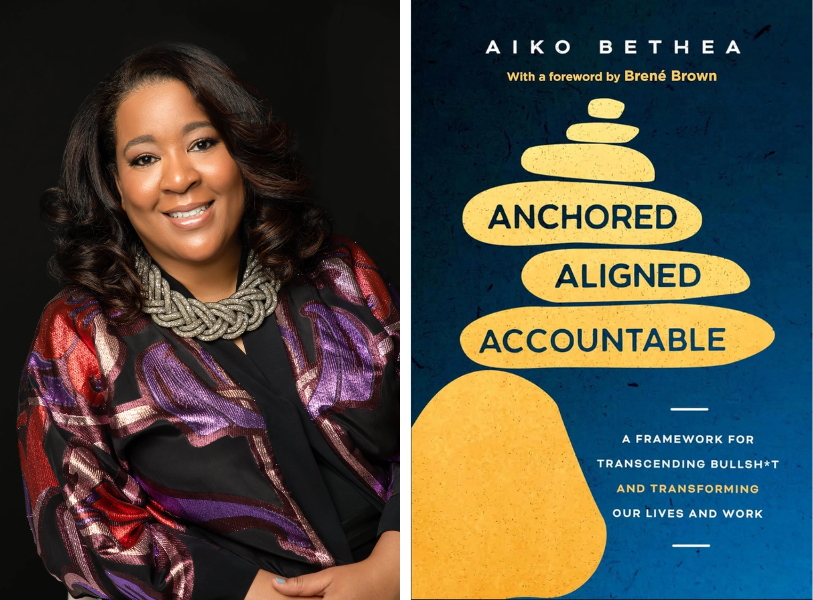
 Dismiss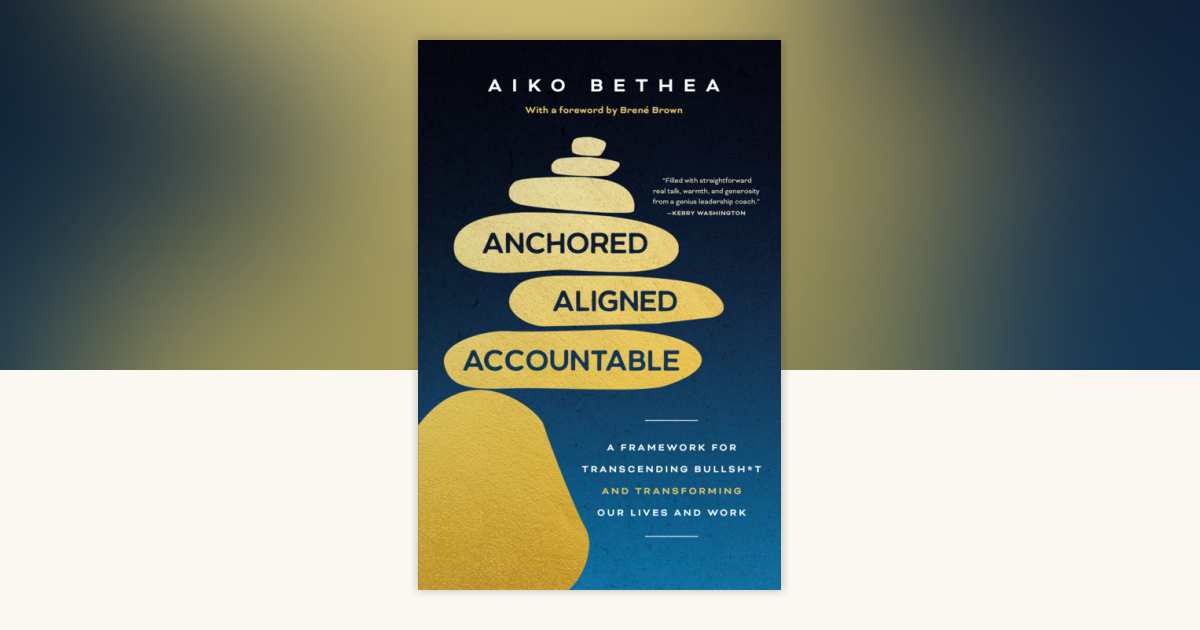
 Jillian Drysdale
 Gretchen Kruesi